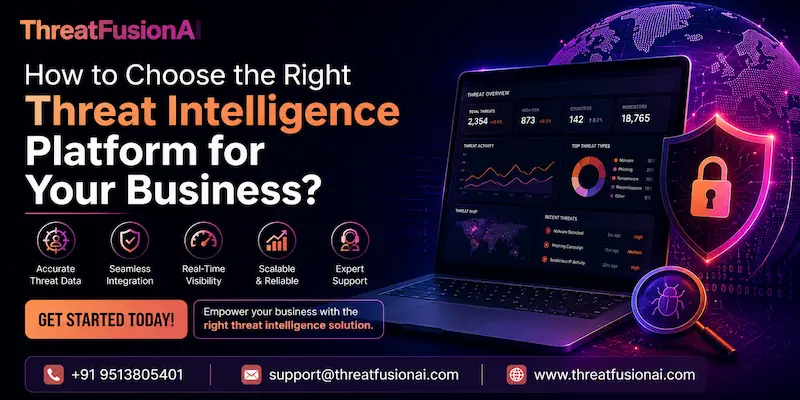
Do you know what a Threat Intelligence Platform (TIP) is and how it can help businesses to protect themselves against online threats? If not, then you are at the right place. Here, we will talk about what a threat intelligence platform is and related benefits in detail.
Moreover, we will introduce you to a reliable threat intelligence solution offered by a reputable VAPT service provider. What are we waiting for? Let’s get straight to the topic!
What Is a Threat Intelligence Platform (TIP)?
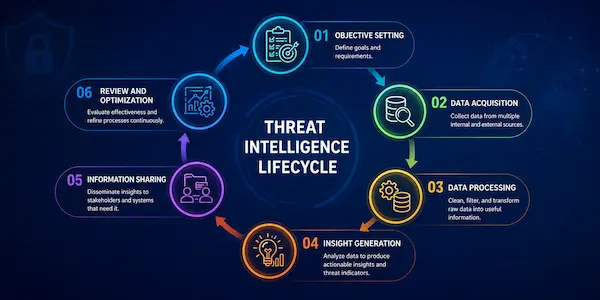
A centralized cybersecurity solution called a Threat Intelligence Platform (TIP) automatically gathers, combines, and correlates threat information from several international streams in real time.
It converts complicated security indications into useful information for security operations teams by normalizing and evaluating this raw data. In the end, a TIP enables businesses to proactively detect new cyberthreats, expedite incident response, and automate protections throughout their current security architecture.
Let’s take a look at what a Threat Intelligence Platform (TIP) is, its uses, its features, and its benefits for businesses!
Why Every Business Needs a Threat Intelligence Platform?
|
S.No. |
Factors |
Why? |
|
1. |
Proactive Threat Detection |
Finds new cyberthreats and weaknesses before hackers can take advantage of them. |
|
2. |
Accelerated Incident Response |
Provides immediate, useful context to speed up security teams' investigation and containment of intrusions. |
|
3. |
Streamlined Tool Integration |
Combines threat inputs into a single hub to fuel firewalls, SIEM, and SOAR automatically. |
|
4. |
Minimized Noise and Alert Fatigue |
Removes false positives and unnecessary data, allowing analysts to concentrate only on high-priority risks. |
|
5. |
Data-Driven Decision Making & ROI |
Offers executive-level security analytics to optimize budget allocation and support cybersecurity spending. |
How to Assess Your Business Security Needs Before Choosing a TIP?
You can assess your business security needs before choosing a TIP in the following ways:
1. Evaluate Your Current Threat Landscape: Determine which particular cyberthreats and attack methods are aimed at your sector.
2. Audit Existing Security Tools: To identify integration requirements and visibility gaps, map your present security stack.
3. Assess Internal Security Capabilities: To decide between managed and self-serve options, consider the size and experience of your workforce.
4. Determine Data and Compliance Requirements: Align platform features with local regulatory frameworks and privacy regulations.
5. Define Key Goals and ROI Metrics: Clearly define success criteria, such as lower operating costs or quicker reaction times.
Types of Threat Intelligence Platforms and Their Use Cases
The following are some types of threat intelligence platforms and their use cases:
● Commercial / Enterprise TIPs: Provide major enterprise security teams with end-to-end automation, premium feeds, and committed support.
● Open-Source / Community-Driven TIPs (e.g., MISP): Offer free, adaptable threat-sharing frameworks to companies that prioritize developers or are on a tight budget.
● Vendor-Integrated / Ecosystem TIPs: Provide smooth, plug-and-play threat intelligence that is integrated into an already-existing security product stack.
● Strategic / Executive TIPs: Convert technical risk into high-level trend reports to inform security investments and business choices.
● Operational / Tactical TIPs: Provide SOC analysts with real-time technical indications (IOCs), so they may automate prompt blocking and response.
Key Features to Look for in a Threat Intelligence Platform
|
S.No. |
Factors |
What? |
|
1. |
Multi-Source Data Aggregation and Normalization |
Consumes unprocessed threat signals from various sources and combines them into a single format for easy analysis. |
|
2. |
Automated Data Enrichment and Correlation |
Automatically identifies attack patterns by connecting related threat behavior and adding important context to indications. |
|
3. |
Real-Time Threat Scoring and Prioritization |
Ranks threats according to their relevance and danger so that analysts can concentrate on the most pressing issues first. |
|
4. |
Seamless Security Stack Integration |
Automates defense and response operations by integrating natively with current systems such as SIEM, SOAR, and EDR. |
|
5. |
Actionable Reporting and Analytics |
Creates concise reports and user-friendly dashboards for senior decision-makers and technical experts. |
Why ThreatFusionAI Is a Smart Choice for Modern Threat Intelligence?
ThreatFusionAI is a smart choice for modern threat intelligence for the following reasons:
a) Multi-Indicator Correlation Engine: Creates a unified danger profile by connecting several indicators from hashes, IP addresses, and domains.
b) Automated MITRE ATT&CK Mapping: Directly matches known adversary strategies and tactics with observed hostile activity.
c) Real-Time Phishing & Data Leak Monitoring: Provides real-time tracking to quickly identify compromised credentials and exposed enterprise data.
d) High-Speed Analytics & Processing: Detects threats instantly by analyzing millions of daily data points with millisecond response times.
e) Interactive Visualization & Instant Pivoting: Allows researchers to quickly find associated indicators by clicking on nodes in dynamic connection graphs.
How Does ThreatFusionAI Help Businesses Detect, Analyze, and Respond to Cyber Threats?
ThreatFusionAI can help businesses detect, analyze, and respond to cyber threats in the following ways:
1. Multi-Source Ingestion & Real-Time Detection: Combines real-time inputs from deep, open, and dark web sources to quickly identify new threats.
2. AI-Driven Correlation & MITRE Mapping: Automatically matches harmful activities to adversary tactics and connects similar signs.
3. Intelligent Noise Reduction & Prioritization: Eliminates false positives and assigns a risk score so that teams may concentrate on what really matters.
4. Proactive Dark Web & Identity Exposure Tracking: Alerts you to stolen company data and compromised credentials by scanning secret forums and marketplaces.
5. Automated SOAR-Ready Response: Allows you to quickly isolate and neutralize attacks by feeding validated context directly into your security playbooks.
Common Mistakes to Avoid When Selecting a Threat Intelligence Platform
|
S.No. |
Mistakes |
What? |
|
1. |
Focusing on Data Volume Over Relevance |
Giving priority to enormous threat feeds rather than carefully selected information that fits your industry and risk profile. |
|
2. |
Ignoring Integration Capabilities |
Selecting a platform that is incompatible with your current security, SOAR, and SIEM systems. |
|
3. |
Overlooking Operational Complexity and Resource Limits |
Choosing a complicated tool that is beyond the capabilities and technical know-how of your security team. |
|
4. |
Failing to Define Clear Use Cases |
Purchasing software without setting clear objectives, operational procedures, and quantifiable performance indicators. |
|
5. |
Neglecting Automation and Noise Reduction |
Choosing a system that does not automatically prioritize critical warnings, instead flooding analysts with false positives. |
Final Thoughts: Choosing the Best Threat Intelligence Platform for Long-Term Cybersecurity
You can choose the best threat intelligence platform for long-term cybersecurity in the following ways:
● Prioritize Decision Conversion over Raw Data Volume: Pay attention to platforms that transform unprocessed indicator data into context-driven, actionable security judgments.
● Ensure Deep Integration with Your Security Architecture: Choose a platform that works well with your current SOAR, EDR, and SIEM ecosystems.
● Demand Behavioral Mapping (MITRE ATT&CK): To better predict cyberattacks, standardize threat context regarding adversary tactics and strategies.
● Balance Automation with Human Oversight: For quick, precise responses, combine expert analyst validation with automated threat scoring.
● Align Platform Capabilities with Organizational Maturity: Select a platform based on the technical expertise, workflows, and financial constraints of your security team.
Conclusion
Now that we have talked about what a Threat Intelligence Platform (TIP) is, you might want to get a dedicated threat intel solution from a reliable source. For that, you can go for ThreatFusionAI, a dedicated threat intelligence platform offered by Craw Security.
ThreatFusionAI can help organizations to secure their data against unknown cyber threats by notifying them about the latest cyber attacks. Thus, you can prepare better security measures. What are you waiting for? Contact, Now!
Frequently Asked Questions
About Threat Intelligence Platform (TIP)
1. What is a threat intelligence platform?
To assist enterprises in proactively identifying and addressing cyber threats, a Threat Intelligence Platform (TIP) is a centralized cybersecurity solution that automatically gathers, correlates, and analyzes threat data from various sources.
2. Why does my business need a threat intelligence platform?
Your business needs a threat intelligence platform for the following reasons:
a) Proactive Threat Detection,
b) Accelerated Incident Response,
c) Streamlined Tool Integration,
d) Minimized Noise and Alert Fatigue, and
e) Data-Driven Decision Making & ROI.
3. How do I choose the right threat intelligence platform?
You can choose the right threat intelligence platform in the following ways:
a) Assess Your Specific Threat Landscape & Goals,
b) Evaluate Integration Capabilities,
c) Prioritize Data Quality and Noise Reduction,
d) Consider Ease of Use and Team Skills, and
e) Factor in Total Cost and ROI.
4. What makes ThreatFusionAI different from other threat intelligence platforms?
By combining AI-driven multi-indicator correlation with millisecond-level processing, automatic MITRE ATT&CK mapping, and real-time monitoring for phishing scams and dark web data dumps, ThreatFusionAI sets itself apart.
5. Which features should I look for in a threat intelligence platform?
You should look for the following features in a threat intelligence platform:
a) Multi-Source Data Aggregation and Normalization,
b) Automated Context, Enrichment, and Correlation,
c) Real-Time Scoring and Noise Reduction,
d) Seamless Security Stack Integration, and
e) Actionable Dashboards and Reporting.
6. Can ThreatFusionAI integrate with existing cybersecurity tools?
Yes, using APIs and automated playbooks, ThreatFusionAI easily connects with current cybersecurity infrastructure, such as SIEM, SOAR, XDR, and EDR systems, to expedite threat detection and response.
7. Is ThreatFusionAI suitable for small and medium-sized businesses?
Because of its flexible pricing tiers, user-friendly interface, and automated threat analysis that reduces the need for a large dedicated cybersecurity team, ThreatFusionAI is appropriate for small and medium-sized organizations.
8. How does a threat intelligence platform improve threat detection and response?
A threat intelligence platform improves threat detection and response in the following ways:
a) Centralizes and Normalizes Raw Data,
b) Accelerates Incident Investigation with Context,
c) Reduces Noise and False Positives,
d) Automates Defensive Actions, and
e) Provides Predictive Threat Mapping.
9. What are the common mistakes to avoid when selecting a threat intelligence platform?
The following are the common mistakes to avoid when selecting a threat intelligence platform:
a) Prioritizing Raw Data Volume Over Relevance,
b) Overlooking Integration Capabilities,
c) Ignoring Your Team's Technical Expertise and Bandwidth,
d) Failing to Establish Clear Use Cases, and
e) Neglecting Automation and Noise Reduction.
10. How can ThreatFusionAI strengthen my organization's cybersecurity strategy?
ThreatFusionAI can strengthen your organization’s cybersecurity strategy in the following ways:
a) Shifts Defense from Reactive to Proactive,
b) Accelerates Incident Investigation & Triage,
c) Eliminates Security Silos,
d) Minimizes SOC Burnout & False Positives, and
e) Provides Executive Visibility & Risk Mapping.