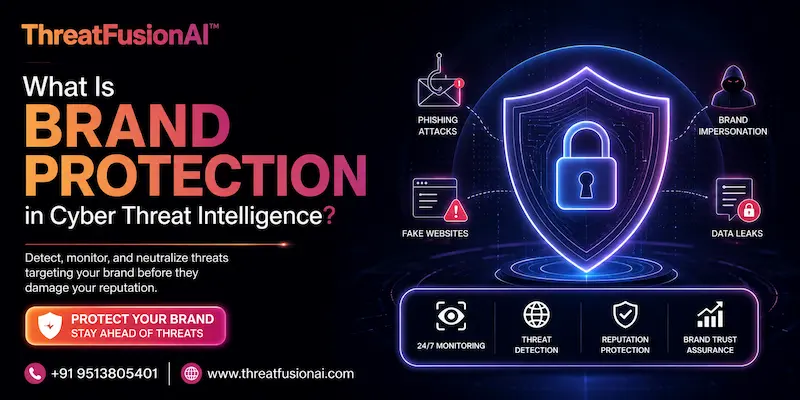
Do you know what Brand Protection in Cyber Threat Intelligence is and its benefits for organizations operating in the IT Industry? If not, then you are at the right place. Here, we will talk about what brand protection is in cyber threat intelligence and related facilities in detail.
Moreover, we will introduce you to a reliable threat intelligence solution offered by a reputable VAPT service provider. What are we waiting for? Let’s get started!
What Is Brand Protection in Cyber Threat Intelligence?
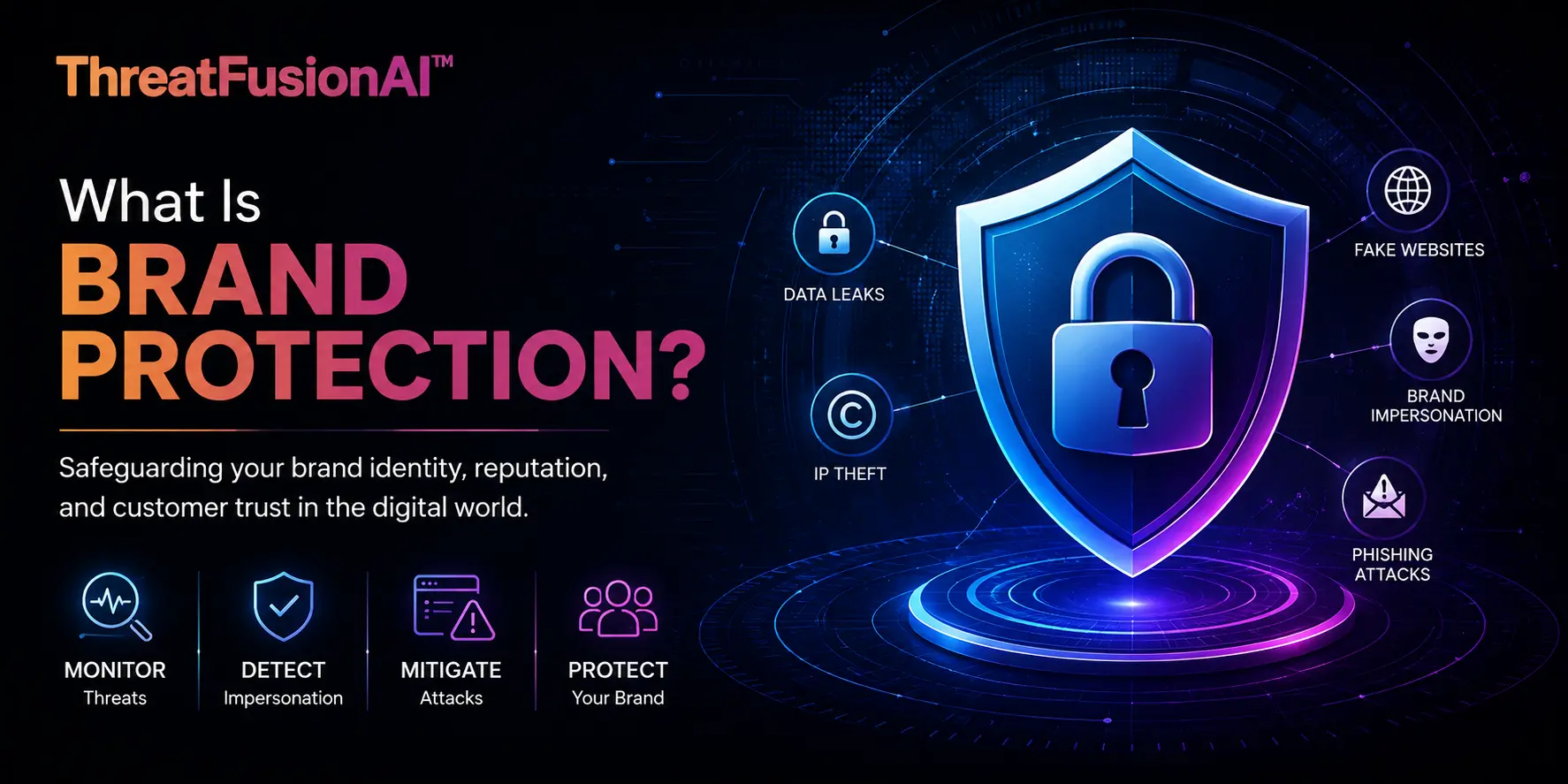
The proactive process of keeping an eye on external digital channels like the dark web, rogue domains, social media, and app stores in order to identify and reduce cyber risks that threaten an organization's brand identification is known as brand protection in Cyber Threat Intelligence (CTI).
It detects online impersonation, phishing domains, trademark infringement, and counterfeit operations by utilizing threat intelligence feeds, machine learning, and automated takedown workflows.
Organizations defend their revenue, uphold customer trust, and safeguard their intellectual property by spotting these fraudulent efforts before they reach customers. Let’s take a look at what Brand Protection in Cyber Threat Intelligence is and related features!
How Does Cyber Threat Intelligence Support Brand Protection?
|
S.No. |
Factors |
How? |
|
1. |
Early Phishing & Typosquatting Detection |
Finds recently registered domains that mimic your brand prior to the start of malicious phishing activities. |
|
2. |
Proactive Social Media & App Store Monitoring |
Finds phony mobile apps that take advantage of consumer trust, false accounts, and unlawful branding. |
|
3. |
Dark Web Surveillance for Leaked Data |
Searches underground forums for plans for brand attacks, corporate data dumps, and stolen consumer credentials. |
|
4. |
Streamlined Automated Takedowns |
Collects useful information to quickly eliminate infringing domains and make legal cease-and-desist requests. |
|
5. |
Executive & VIP Identity Protection |
Keeps an eye out for specific social engineering attacks on firm executives, doxxing, and executive impersonation. |
The Role of Digital Risk Protection (DRP) in Brand Security
The following are the roles of DRP in brand security:
1. Dark & Deep Web Surveillance: Keeps an eye on underground marketplaces to find trade secrets, stolen passwords, and cyberthreats that target specific brands.
2. Domain & Social Media Impersonation Defense: Detects counterfeit landing sites, typosquatting domains, and phony social media identities that trick your clients.
3. Automated Threat Remediation & Takedowns: Accelerates the collection of legal evidence and initiates takedown requests automatically to remove harmful online content.
4. Executive & VIP Identity Safeguarding: Prevents the exposure of personal information, the establishment of phony profiles, and targeted spear-phishing.
5. Fraud & Anti-Counterfeiting Prevention: Monitors internet platforms to find instances of illicit distribution, unapproved use of logos, and sales of fake goods.
Best Practices for Building an Effective Brand Protection Program
The following are best practices for building an effective brand protection program:
● Implement Multi-Channel Digital Monitoring: Keep an eye out for brand abuse on social media, app stores, dark web forums, and domains.
● Establish Rapid Takedown Protocols: Collaborate with hosting companies and registrars to quickly eliminate false profiles and malicious websites.
● Integrate Digital Risk Protection (DRP) & ASM Tools: To find exposures early, combine threat intelligence with external attack surface discovery.
● Safeguard Executive & Corporate Identities: To stop spear-phishing and impersonation assaults, keep an eye on company trademarks and leadership profiles.
● Foster Cross-Functional Collaboration: Standardize response processes for brand threats by coordinating the legal, IT, marketing, and security departments.
Choosing the Right Brand Protection and Threat Intelligence Solution
|
S.No. |
Factors |
How? |
|
1. |
Comprehensive Source & Dark Web Coverage |
Checks for brand misuse and exposed credentials on the open web, app stores, social media, code repositories, and illegal dark web forums. |
|
2. |
Automated & Managed Takedown Services |
Combines registrar integration with direct law enforcement to quickly take down phishing websites and false profiles. |
|
3. |
Context-Driven Risk Prioritization |
Uses threat intelligence and business context to score identified threats so that security teams address high-impact concerns first. |
|
4. |
Seamless API & Security Stack Integration |
Enhances security operations and initiates automatic actions by integrating seamlessly with current SIEM, SOAR, and ticketing systems. |
|
5. |
Real-Time Alerting & Low False-Positive Rates |
Provides instantaneous, actionable, high-confidence alarms without taxing security operations center (SOC) analysts. |
Future Trends in Brand Protection and Cyber Threat Intelligence
The following are future trends in brand protection and cyber threat intelligence:
a) AI-Driven "Superfake" & Deepfake Detection: Uses generative AI to quickly identify incredibly convincing brand impersonations, cloned voices, and synthetic media.
b) Integration of ASM, CTI, and Digital Risk Protection (DRP): Combines digital risk, threat intelligence, and asset identification into a single perimeter defense hub.
c) Automated & Proactive Takedown Workflows: Uses API legal networks and machine learning to automatically destroy phishing websites in a matter of minutes.
d) Shift to Identity-Centric Brand Defense: Protects client login passwords, employee identities, and executive digital footprints.
e) Supply Chain & Third-Party Brand Exposure Tracking: Keeps an eye on vendor networks and outside partners to stop supply chain violations from causing collateral brand damage.
Conclusion
Now that we have talked about what Brand Protection is in Cyber Threat Intelligence, you might want to get a dedicated security intel solution. For that, you can go for ThreatFusionAI, a dedicated threat intel platform offered by Craw Security.
ThreatFusionAI can offer valuable information about cyber threats and malicious attempts to organizations for the protection of their devices. Thus, you will be able to feel secure while working online. What are you waiting for? Contact, Now!
Frequently Asked Questions
About Brand Protection in Cyber Threat Intelligence
1. What is brand protection in cyber threat intelligence?
The proactive monitoring and mitigation of external digital threats that target an organization's brand name, intellectual property, and customer trust, such as phishing domains, executive impersonation, rogue apps, and dark web leaks, is known as brand protection in Cyber Threat Intelligence (CTI).
2. Why is brand protection important for businesses?
Brand protection is important for businesses for the following reasons:
a) Preserves Customer Trust and Loyalty,
b) Protects Financial Revenue,
c) Mitigates Cyber and Data Breach Risks,
d) Defends Intellectual Property, and
e) Maintains Market Reputation and Value.
3. How does cyber threat intelligence help protect a brand?
Cyber threat intelligence helps protect a brand in the following ways:
a) Detects Rogue Infrastructure Early,
b) Monitors Underground Marketplaces,
c) Exposes Executive & VIP Impersonation,
d) Enables Rapid Takedown Enforcement, and
e) Protects Intellectual Property & Product Integrity.
4. What are the most common threats to a company's brand?
The following are the most common threats to a company’s brand:
a) Phishing & Typosquatting,
b) Executive & Brand Impersonation,
c) Dark Web Data Leaks,
d) Rogue Mobile Apps & Social Media Scams, and
e) Counterfeiting & Intellectual Property Abuse.
5. How can businesses detect phishing websites using threat intelligence?
Businesses can detect phishing websites using threat intelligence in the following ways:
a) Automated Domain Registration Monitoring,
b) Certificate Transparency (CT) Log Analysis,
c) Computer Vision & Visual Similarity Matching,
d) DNS and Infrastructure Correlation, and
e) Dark Web & Telemetry Feed Analysis.
6. What is the difference between brand protection and digital risk protection?
While Digital Risk Protection (DRP) protects an organization's entire external footprint, including exposed cloud infrastructure, data leaks, and supply chain vulnerabilities, Brand Protection concentrates on protecting an organization's identity, reputation, and intellectual property from online abuse like fake domains and counterfeiting.
7. How does dark web monitoring support brand protection?
Dark web monitoring supports brand protection in the following ways:
a) Detects Exposed Credentials & Account Takeovers,
b) Uncovers Stolen Source Code & Intellectual Property,
c) Provides Early Warning on Planned Cyberattacks,
d) Identifies Counterfeit & Fraudulent Trade, and
e) Mitigates Ransomware & Data Leak Extortion.
8. Can small businesses benefit from brand protection solutions?
Yes, a single domain impersonation or phishing attack can destroy a small business's reputation, client confidence, and financial stability more quickly than it would a large corporation, and small businesses are often the targets of scams. For this reason, small businesses greatly benefit from brand protection solutions.
9. What features should organizations look for in a brand protection platform?
Organizations should look for the following features in a brand protection platform:
a) Comprehensive Multi-Channel Detection,
b) Computer Vision & AI Analysis,
c) End-to-End Managed Takedown Services,
d) Contextual Threat Scoring & Low False Positives, and
e) Seamless API & Security Stack Integration.
10. How often should companies monitor their brand for cyber threats?
Because malicious domains and phishing operations may be launched in a matter of minutes, businesses should constantly and in real time (24/7/365) monitor their brand for cyber threats.