Do you know what Automated MITRE Mapping is and how it can help in fighting against online threats? If not, then you are at the right place. Here, we will talk about what Automated MITRE Mapping is and related benefits in detail.
Moreover, we will introduce you to a reliable threat intelligence solution offered by a reputable VAPT service provider. What are we waiting for? Let’s get straight to the topic!
What Is Automated MITRE Mapping in Threat Hunting?
Automated MITRE Mapping in threat hunting automatically correlates security logs, telemetry, and observed attacker actions with certain MITRE ATT&CK framework tactics using machine learning and security automation tools.
SOC analysts may quickly identify attack vectors without doing manual lookups by automatically tagging real-time alerts and raw data to standardized threat actor TTPs (Tactics, Techniques, and Procedures).
In the end, this accelerates total incident response, identifies coverage holes in an organization's defenses, and speeds up threat detection. Let’s take a look at what Automated MITRE Mapping is and related benefits!
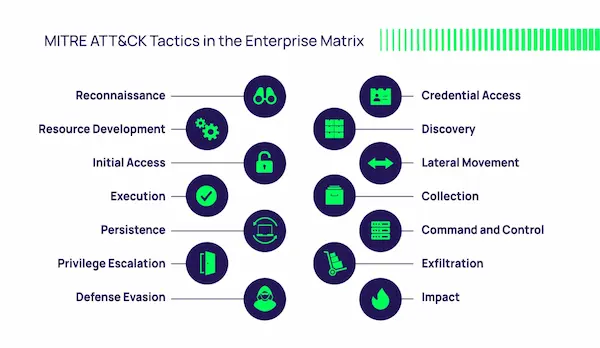
Why MITRE ATT&CK Matters in Modern Threat Hunting?
|
S.No. |
Factors |
Why? |
|
1. |
Establishes a Standardized Threat Language |
Gives security teams a standard framework for categorizing, discussing, and recording adversary activities around the world. |
|
2. |
Shifts Focus from Artifacts to Behaviors |
Detects persistent attacker strategies and tactics instead of quickly changing IOCs like file hashes. |
|
3. |
Identifies Blind Spots in Defense Coverage |
Identifies weaknesses in monitoring and telemetry to guarantee complete security throughout the whole attack lifecycle. |
|
4. |
Enables Proactive Hypothesis-Driven Hunting |
Provides analysts with real-world adversary patterns to create hunting scenarios that are specific and predicated on assumptions. |
|
5. |
Facilitates Threat-Informed Defense & Emulation |
Enables teams to test and continuously validate current controls by simulating known adversary tactics. |
Data Sources Used for Automated Mapping
The following data sources are used for automated mapping:
1. Endpoint Process Telemetry & OS Logs: Identifies execution and persistence strategies by capturing host-level execution, command-line arguments, and system changes.
2. Network Traffic & Sensor Logs: Examines packet captures, DNS requests, and flow data to map data exfiltration, lateral movement, and network communications.
3. Identity & Authentication Logs: Monitors account changes, privilege escalation, and login attempts to identify identity-based attacks and credential access.
4. Cloud Infrastructure & Service Audit Logs: Detects resource manipulation and cloud exploitation by keeping an eye on control plane activities, API calls, and permission modifications.
5. Threat Intelligence Feeds & STIX/TAXII Data: Enables the automatic alignment of observed adversary TTPs with established MITRE frameworks by providing structured contextual threat data.
Mapping Threat Intelligence to ATT&CK Techniques
Extracting observed adversary behaviors from threat feeds or incident reports and directly connecting them to standardized MITRE TTP codes is the process of mapping threat intelligence to ATT&CK procedures.
Security teams can swiftly comprehend adversary tactics, rank high-risk threats, and regularly verify their defensive procedures thanks to this conversion, which turns raw indication data into actionable context.
Role of SIEM, XDR, and EDR in Automated MITRE Mapping
|
S.No. |
Roles |
What? |
|
1. |
EDR |
Maps malicious activities at the endpoint level directly to MITRE TTPs by capturing host behaviors and process execution. |
|
2. |
SIEM |
Centralizes multi-source logs to show organizational MITRE coverage gaps and correlate cross-platform occurrences. |
|
3. |
XDR |
Assembles complete cross-domain attack chains into automated MITRE operations by integrating telemetry from endpoints, networks, identities, and the cloud. |
How Does Automated MITRE Mapping Work?
Automated MITRE mapping works in the following ways:
● Continuous Telemetry Collection: Incorporates events in real time from cloud environments, networks, endpoints, and identities.
● Behavior Parsing & Feature Extraction: Transforms unstructured log data into structured information, such as command lines and process trees.
● Rule & ML-Based Correlation: Uses AI models and detection techniques to match extracted behaviors against known adversary patterns.
● Automated Technique Tagging: Instantly gives connected security events unique MITRE ATT&CK method IDs.
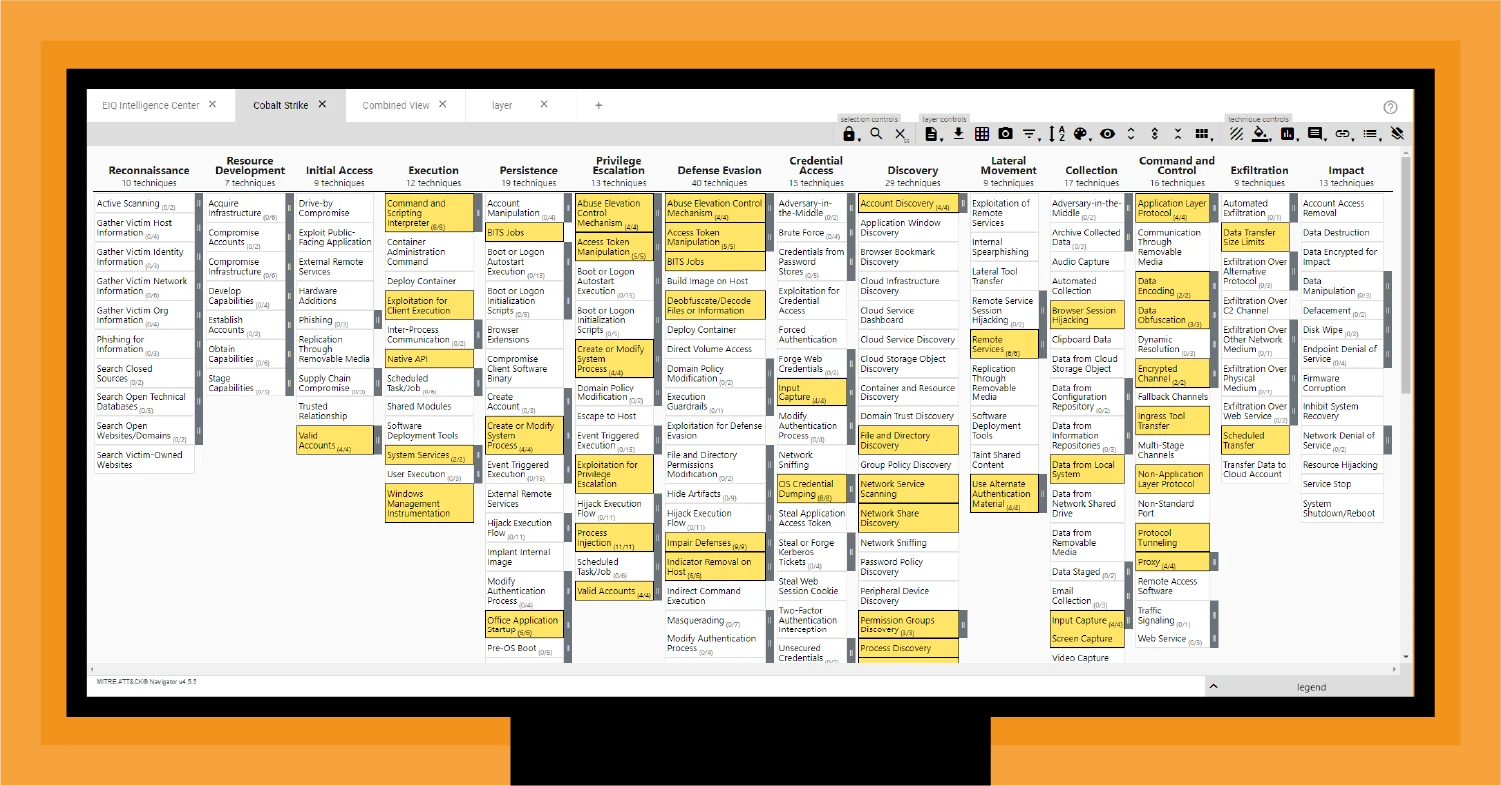
● Heatmap & Coverage Visualization: Shows active threats and defensive weaknesses by mapping tagged alerts onto the ATT&CK grid.
Benefits of Automated MITRE Mapping for Security Teams
The following are the benefits of automated MITRE mapping for security teams:
a) Accelerates Incident Response & Triage: Instantaneously contextualizing alarms with recognized adversary tactics and methodologies expedites investigations.
b) Eliminates Manual Tagging Inconsistencies: Substitutes uniform, repeatable classification for human error in all incoming security telemetry.
c) Exposes Defensive Gaps & Blind Spots: Enables teams to proactively improve detection rules by highlighting unmonitored matrix approaches.
d) Enhances Proactive Threat Hunting: Enables the rapid development and validation of hypothesis-driven hunts by providing organized, threat-informed data.
e) Reduces Alert Fatigue & Prioritizes High-Risk Threats: Groups linked occurrences into high-priority, actionable attack tales by filtering background noise.
Identifying Coverage Gaps and Blind Spots
|
S.No. |
Factors |
What? |
|
1. |
Telemetry Deficits |
Locating blind spots in network traffic where malicious activity cannot be detected, unmonitored endpoints, or missing audit logs. |
|
2. |
Unmapped ATT&CK Techniques |
Identifying particular adversary strategies and tactics that do not yet have active detection rules in the MITRE ATT&CK matrix. |
|
3. |
Over-Reliance on Basic IOCs |
Identifying situations in which security monitoring does not track behavioral patterns (TTPs) but instead relies only on static indications (such as file hashes). |
|
4. |
Visibility Gaps Across Hybrid Domains |
Identifying connections between non-human identities (APIs/service accounts), cloud environments, and on-premises infrastructure. |
|
5. |
Outdated Detection Logic |
Finding antiquated rules that are unable to identify living-off-the-land (LotL) assaults, zero-day exploits, or new evasive behaviors. |
Future of AI-Driven MITRE Mapping and Threat Hunting
Autonomous AI SOC agents and predictive analytics that continually convert multi-cloud telemetry into real-time attack graphs and active MITRE ATT&CK/ ATLAS mappings are essential to the future of AI-driven MITRE mapping and threat hunting.
Security teams can now predict adversary movements and close coverage gaps in seconds rather than days thanks to this change in threat hunting from reactive, manual log lookups to continuous, hypothesis-driven defense.
Conclusion: Why Automated MITRE Mapping Is Becoming Essential?
Now that we have talked about what Automated MITRE Mapping is, you might want to get a dedicated threat intel solution from a reliable source. For that, you can go for ThreatFusionAI, a dedicated threat intel platform offered by Craw Security.
ThreatFusionAI can help organizations by notifying them about the latest cyber threats and malicious risks so that they can enhance their security measures. What are you waiting for? Contact, Now!
Frequently Asked Questions
About Automated MITRE Mapping
1. What is Automated MITRE Mapping in threat hunting?
Automated MITRE Mapping in threat hunting rapidly correlates telemetry and observed attacker actions with certain MITRE ATT&CK framework methodologies using AI and security automation tools.
2. How does Automated MITRE Mapping work?
Automated MITRE mapping works in the following ways:
a) Continuous Telemetry Collection,
b) Behavior Parsing & Feature Extraction,
c) Rule & ML-Based Correlation,
d) Automated Technique Tagging, and
e) Heatmap & Coverage Visualization.
3. Why is MITRE ATT&CK important for threat hunters?
MITRE ATT&CK is important for threat hunters for the following reasons:
a) Establishes a Common Language,
b) Shifts Focus to Behavioral Detection,
c) Uncovers Defensive Blind Spots,
d) Drives Hypothesis-Based Hunting, and
e) Enables Threat-Informed Emulation.
4. What are the benefits of Automated MITRE Mapping?
The following are the benefits of automated MITRE mapping:
a) Accelerates Incident Response & Triage,
b) Eliminates Manual Tagging Inconsistencies,
c) Exposes Defensive Gaps & Blind Spots,
d) Enhances Proactive Threat Hunting, and
e) Reduces Alert Fatigue & Prioritizes Threats.
5. Can Automated MITRE Mapping improve threat detection accuracy?
Yes, by connecting raw telemetry with defined behavioral patterns (TTPs), lowering false positives brought on by isolated alarms, and exposing contextual attack pathways, automated MITRE mapping increases detection accuracy.
6. What data sources are used for MITRE ATT&CK mapping?
The following data sources are used for MITRE ATT&CK mapping:
a) Process Telemetry & Command-Line Execution,
b) Network Traffic & Communication Logs,
c) File System & Registry Activity,
d) Identity & Authentication Events, and
e) Cloud & Infrastructure Audit Logs.
7. How is Automated MITRE Mapping different from manual mapping?
While manual mapping depends on analysts reviewing logs, investigating methods, and assigning IDs by hand, automated MITRE mapping employs AI and analytics to interpret data and tag TTPs in real time at scale.
8. Which security tools support Automated MITRE Mapping?
The following security tools support automated MITRE mapping:
a) Enterprise SIEMs,
b) Next-Gen EDR/ XDR Platforms,
c) SOAR Solutions,
d) Breach & Attack Simulation (BAS) Tools, and
e) Open-Source Visualization & Framework Tools.
9. What are the challenges of implementing Automated MITRE Mapping?
The following are the challenges of implementing automated MITRE mapping:
a) High False Positive & Over-Mapping Rates,
b) Contextual & Intent Blindness,
c) Telemetry & Visibility Gaps,
d) Constant Framework Evolution, and
e) Data Normalization & Ingestion Overhead.
10. How does Automated MITRE Mapping help in incident response and threat hunting?
Automated MITRE mapping helps in incident response and threat hunting in the following ways:
a) Accelerates Incident Triage,
b) Contextualizes Full Attack Chains,
c) Enables Hypothesis-Driven Hunting,
d) Reveals Defensive Blind Spots, and
e) Standardizes Threat Intelligence Sharing.