Do you know how Advanced Persistent Threat (APT) attacks target victims and how you can protect yourself if you confront one? If not, then you are at the right place. Here, we will talk about the APTs in detail and the best prevention methods.
Moreover, we will introduce you to a reliable Threat Intel solution offered by a reputed VAPT service provider. What are we waiting for? Let’s get straight to the topic!
What Is an APT Attack?
A sophisticated, protracted cyberattack known as an Advanced Persistent Threat (APT) occurs when a highly competent threat actor, typically state-sponsored or affiliated with organized crime, establishes an undetected, long-term presence within a network.
APTs concentrate on covertly retaining access over months or years in order to steal valuable data, eavesdrop on communications, or compromise vital systems, in contrast to conventional fast-paced attacks.
To get beyond common defenses and gradually infiltrate an organization's infrastructure, they use bespoke malware, social engineering, and ongoing human monitoring. Let’s talk about what Advanced Persistent Threat (APT) Attacks are and how you can defend yourself against such threats!
Key Characteristics of Advanced Persistent Threats
The following are some key characteristics of APTs:
1. High Level of Sophistication: Attackers employ highly sophisticated engineering, zero-day exploits, and bespoke malware.
2. Prolonged Persistence: For months or years, the threat remains unnoticed within the network.
3. Stealth and Evasion: Low-and-slow strategies are given priority by operations in order to actively evade security measures and conceal data exfiltration.
4. Targeted and Resourceful: Concentrates only on particular, high-value goals supported by substantial funding and human intelligence.
5. Multi-Stage Lifecycle: From a stealthy initial admission to ongoing, lateral network movement, campaigns adhere to a rigorous process.
How APT Attacks Differ from Traditional Cyberattacks?
|
S.No. |
Topics |
Factors |
What? |
|
1. |
Traditional Cyberattacks |
Opportunistic Nature |
Instead of focusing on a particular company, attackers use automated tools to cast a wide net and target any vulnerable system. |
|
Short Duration |
The goal is a quick hit, like using ransomware to infect a system or stealing credentials right away before leaving quickly. |
||
|
Basic Tooling |
They mostly rely on well-known, commercially available malware and exploits that are simple for regular antivirus software to identify. |
||
|
2. |
APT Attacks |
Highly Targeted |
Campaigns are carefully designed and tailored to support a specific, valuable government agency or group. |
|
Long-Term Presence |
Extreme persistence is the main objective, with hackers hiding inside the network for months or years in order to gradually gather data. |
||
|
Bespoke Capabilities |
To get around sophisticated security measures, attackers use custom-coded malware, zero-day exploits (previously undiscovered vulnerabilities), and manual, human-driven evasion techniques. |
Who Conducts APT Attacks and Why?
The following individuals conduct APT attacks, and for the given reasons:
● Nation-States and State-Sponsored Groups: Motivated by geopolitical goals to get political information, steal military intelligence, or destroy vital infrastructure.
● Organized Cybercrime Syndicates: Driven only by the desire for enormous financial gain through extortion, corporate espionage, and high-stakes data theft.
● Hacktivist Collectives (Rare): Motivated by social, political, or ideological reasons to destroy target organizations or publicly reveal secrets.
The APT Lifecycle: From Reconnaissance to Data Exfiltration
In order to gain an initial footing within a target network, the APT lifecycle is a multi-stage campaign that starts with thorough reconnaissance and spear-phishing. Once inside, attackers use specialized tools to create persistent backdoors, travel laterally across systems, and escalate privileges. This enables them to find and steal valuable data over an extended period of time.
Common Techniques Used by APT Attackers
|
S.No. |
Factors |
What? |
|
1. |
Spear-Phishing Campaigns |
Attackers send highly personalized, misleading emails to particular targets in an attempt to deceive them into opening harmful attachments or disclosing access credentials. |
|
2. |
Exploiting Zero-Day Vulnerabilities |
Before a patch can be created, threat actors use previously undiscovered software security weaknesses as a weapon to covertly compromise networks. |
|
3. |
Credential Stuffing and Brute Force |
Hackers persistently guess passwords and take over authentic user accounts using automated methods or stolen login credentials. |
|
4. |
Lateral Movement |
Once entered, attackers methodically move between internal servers and workloads in order to find sensitive databases and valuable assets. |
|
5. |
Stealthy Data Exfiltration |
To prevent setting off automated data protection alerts, stolen data is encrypted, compressed, and gradually leaked out of the network in small batches. |
The Role of Threat Intelligence in APT Detection
The following are the roles of threat intelligence in APT detection:
a) Identifying Indicators of Compromise (IoCs): Threat intelligence provides security tools with real-time malicious IP addresses, file hashes, and domains to quickly identify ongoing intrusions.
b) Mapping Adversary Tactics (TTPs): In order to identify the precise techniques employed by recognized APT organizations, security teams align network anomalies with frameworks such as MITRE ATT&CK.
c) Shifting from Reactive to Proactive Hunting: Before an alert is ever created, analysts aggressively explore their networks for hidden risks using global threat telemetry.
d) Predicting Attacker Motivations: Organizations can predict which particular APT actors may target them and what assets they are pursuing by having a thorough understanding of geopolitical environments.
e) Accelerating Incident Response: Defenders can isolate affected systems more quickly thanks to contextual data, which provides them with instant answers about the seriousness of a threat.
Continuous Monitoring: The Role of EDR, XDR, and SIEM
The following are the roles of EDR, XDR, and SIEM:
1. EDR (Endpoint Detection and Response): Keeps a close eye on certain devices, such as laptops and servers, in order to detect, isolate, and look into harmful activities at the host level.
2. XDR (Extended Detection and Response): Creates a single, coherent picture of a complex attack by combining and correlating threat data from endpoints, networks, cloud environments, and emails.
3. SIEM (Security Information and Event Management): Gathers, compiles, and evaluates log data from every part of the company's infrastructure to identify trends, set off warnings, and ensure compliance.
Best Practices for Preventing APT Attacks
|
S.No. |
Practices |
What? |
|
1. |
Implement Zero Trust and Least Privilege |
Limit access to only what is necessary for their job, and never trust any user or device by default. |
|
2. |
Deploy Advanced Endpoint Protection (EDR/ XDR) |
Maintain constant security and monitoring of all user devices and networks to quickly identify and isolate malicious, concealed activities. |
|
3. |
Enforce Rigorous Patch Management |
All organizational systems should automatically update and correct software flaws before hackers can take advantage of them. |
|
4. |
Conduct Continuous Security Awareness Training |
Employees should be regularly trained to recognize and report advanced spear-phishing efforts and social engineering traps. |
|
5. |
Establish Robust Network Segmentation |
To prevent attackers from migrating laterally in the event that they are able to breach an access point, divide the corporate network into isolated zones. |
Incident Response Planning for APT Threats
Instead of just quickly wiping systems, an incident response plan for APT attacks emphasizes long-term containment and full eradication to guarantee that attackers are totally eliminated from any concealed backdoors.
In order to prevent quick reinfection, it creates specialized hunter-responder teams that trace the whole extent of the lateral movement, preserve volatile forensic evidence, and meticulously plan a simultaneous network-wide eviction.
Real-World Examples of Advanced Persistent Threat Attacks
The following are some real-world examples of APT attacks:
● Stuxnet (2010): By manipulating the rotor speeds of Iran's nuclear centrifuges, a sophisticated cyberweapon was used to physically destroy them.
● The SolarWinds Supply Chain Attack (2020): Russian hackers surreptitiously compromised thousands of international organizations and U.S. government institutions by inserting a harmful backdoor into genuine software updates.
● Salt Typhoon Telecom Campaign (2024–2025): Chinese state-sponsored actors gained extensive access to major international telecommunications networks to take control of legitimate wiretapping systems and intercept senior political officials' private conversations.
Emerging APT Trends and Future Threat Landscape
|
S.No. |
Factors |
What? |
|
1. |
AI-Powered Social Engineering and Evasion |
Attackers employ generative AI to dynamically rewrite malware code to get over security filters and create perfect phishing emails. |
|
2. |
Deepening Supply Chain Exploitation |
Threat actors silently hack thousands of downstream targets at once by compromising software updates and reliable third-party vendors. |
|
3. |
Weaponization of Cloud and Edge Devices |
In order to create difficult-to-trace access points, hackers mostly target routers, IoT devices, and inadequately secured cloud infrastructure. |
|
4. |
Living off the Cloud (LotC) Tactics |
In order to carry out assaults without using recognizable malware, APTs take over an organization's genuine, native cloud management tools. |
|
5. |
Geopolitical Alignment and Hybrid Warfare |
To destroy vital infrastructure, rig elections, and conduct espionage operations, cyber activities are carefully timed to coincide with actual hostilities. |
Conclusion: Strengthening Your Organization Against APT Attacks
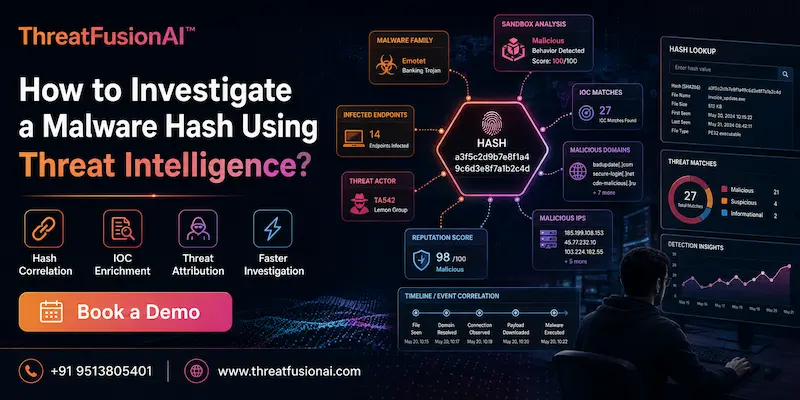
Now that we have talked about what Advanced Persistent Threat (APT) Attacks are, you might want to protect yourself against such threats. For that, you can go for Threat Fusion AI, a dedicated threat intel tool offering the latest data related to rampaging malicious threats.
Moreover, you will be able to learn more about how to tackle any unknown threats with the help of Threat Fusion AI offered by Craw Security. Thus, you can rely on this tool. What are you waiting for? Contact, Now!
Frequently Asked Questions
About Advanced Persistent Threat (APT) Attacks
1. What exactly is an APT attack?
An Advanced Persistent Threat (APT) is a long-term, covert cyberattack in which highly experienced hackers continue to gain unauthorized access to a network for months or years in order to acquire confidential information.
2. What are the 4 types of attacks?
The following are the 4 types of attacks:
a) Malware Attacks,
b) Social Engineering Attacks,
c) Network & Infrastructure Attacks, and
d) Web Application & Exploit Attacks.
3. What are the 4 types of intrusion detection systems?
The following are the 4 types of intrusion detection systems:
a) Network Intrusion Detection System (NIDS),
b) Host-Based Intrusion Detection System (HIDS),
c) Protocol-Based Intrusion Detection System (PIDS), and
d) Application Protocol-Based Intrusion Detection System (APIDS).
4. What is APT in simple words?
An APT is comparable to a highly experienced spy who enters a company's computer network covertly and remains undetected for an extended period of time in order to steal secrets.
5. What is APT used for?
APTs are used for long-term espionage, stealing extremely sensitive intellectual property, and monitoring or undermining business and governmental institutions.
6. Are there famous examples of APT attacks?
Yes, well-known instances include the recent Salt Typhoon campaign that targeted international telecom networks, the SolarWinds supply chain attack by Russian state hackers, and Stuxnet, which physically destroyed Iranian nuclear centrifuges.
7. What is the APT process in cybersecurity?
Hackers investigate a target, breach the network, create covert persistence, move laterally to locate important assets, and gradually quietly exfiltrate data as part of the multi-phase APT process.
8. Who is typically behind APT attacks?
APT attacks are usually carried out by highly organized, sophisticated cybercriminal syndicates seeking enormous financial gain or well-funded nation-state hackers undertaking geopolitical espionage.
9. What are the 4 types of threat actors?
The following are the 4 types of threat actors:
a) Nation-State Actors,
b) Cybercriminals,
c) Hacktivists, and
d) Insider Threats.
10. Why are APT attacks hard to detect?
APT attacks are hard to detect for the following reasons:
a) Evading Traditional Detection,
b) Low and Slow Strategy,
c) Living off the Land (LotC),
d) Sophisticated Hidden Identity, and
e) Clearing Forensic Evidence.